At this stage, Graphic Artists and Visual Designers work in film post-production along with the Art Department and Production Design teams. They are done filming the scenes using the props and sets that Graphic Artists and Visual Designers made in Photoshop, Auto CAD, or with metal and wood. Now it is time to make sure everything looks perfect on film. This is part of post-production. As an example, imagine that a chef has prepared the main course and desserts. Now, they have to tell the servers to serve the meat and gravy first and then the pudding. Because savoury followed by sweet is the proper way to enjoy the flavours of a meal. Let us see how Visual Designers and Graphic Artists in movies will work after filming.
Part 2 – Post-production
Matching Themes and Schemes
After a scene on a battlefield, there might be a scene to mourn the loss. If the battle scene is full of dark earthy colours and grunge textures then the mourning scene will also have to have a muted colour scheme. The little flag pins on jackets, the wreaths of Lilies, the colours of the ribbons, etc. are also adjusted. The Visual Artist will have to advise the production team not to over-saturate the colours or overexpose the highlights. This is not far from the work of a Graphic Designer whose job it is to make sure that highlights and shadows are done just right.
Finishing
Each of these scenes is crafted meticulously and placed in the proper sequence. Doing this makes the scenes sync with the shifting tone of the narrative. Once this is done, the film’s Production Design team, Art Department and Graphic Artists team ideally watch the movie together. At this stage, the entire film is already shot and mostly edited.
However, just in case the Visual Artists spot any discrepancies and it is too late to go rebuild a set or change the graphics in a prop, the Post-production Team of CGI and VFX artists are called in. This is where the colours and details of an object on set can be corrected. This is where innovative graphic design techniques are used in movies. The Graphic Artist and Visual Designer will immediately get to work to digitally alter these details and have the VFX team implement it in the film.
Overall Aesthetics
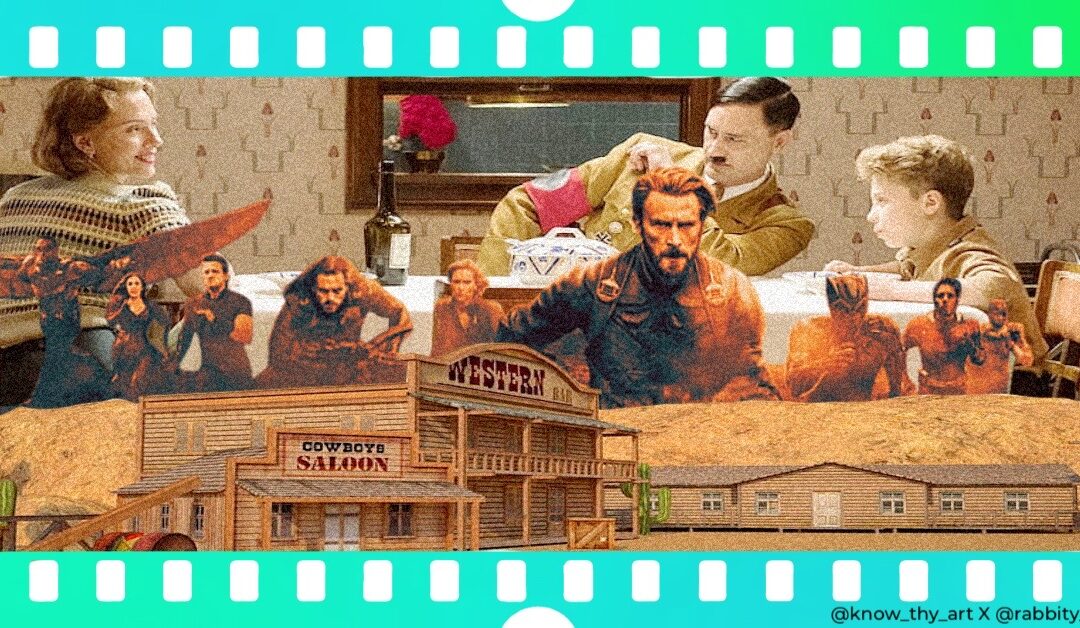
The main pillar of a movie is the story. This story has a genre, mood and vibe. The soundtrack and music have to be in line with the movie’s story. Similarly, art and design should also lend themselves to the mood. If a film is set in the Old West, then the aesthetic will have bright afternoon sunny scenes. Such a colour filter will visually communicate “scorching heat.” Creating effects with visual design in movies has always been an important part of filming. Graphic Artists and Visual Designers in film post-production will make sure the fonts on shop signs have an Old West vibe. Also, the bright yellowish-orange filters will help the audience feel the visuals. The Art Department will have to notice each detail. This will help them make sure the overall aesthetics bring out the mood of the narrative.
Visual Designers and Graphic Artists in film production are needed at three equally important stages. These artists and designers are needed at the time of Production, Post-Production and finally at the time of Promotion. With the changing times, the landscape of cinema is ever-evolving. At this time, graphic designers and visual artists are important jobs in movie making. This is because films and TV series have become more detail-oriented and visual spectacles.
The nature of the work of a graphic artist and visual designer can range from hands-on work to collaborations with other departments in film production and finally as advisors. Each of the 3 parts can have a mix of some or all these roles.
Part 1 – Production
Set Design
If the scene is shot in a dance club, then the colours of the walls, placement of lights, interior design, the bar set, light colours and cues based on the sound and even the recommended colours of the costume can be decided by the art department. If the set of the club is built from scratch, then the Prop Masters get to work on the 3D modelling. Or the filmmakers choose an existing club as the location. In this case, the Set Designers will have to work closely with the Director of Photography. DOPs know which colour lights, neons, smoke diffusion and other elements to coordinate to get the best visual appeal for the scene.
Prop Design
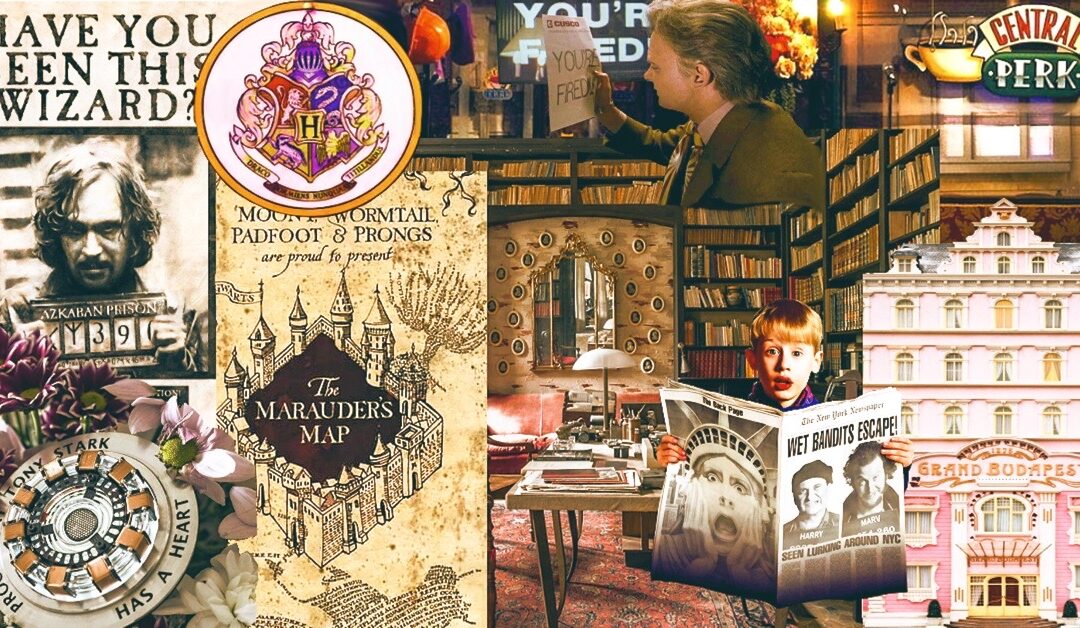
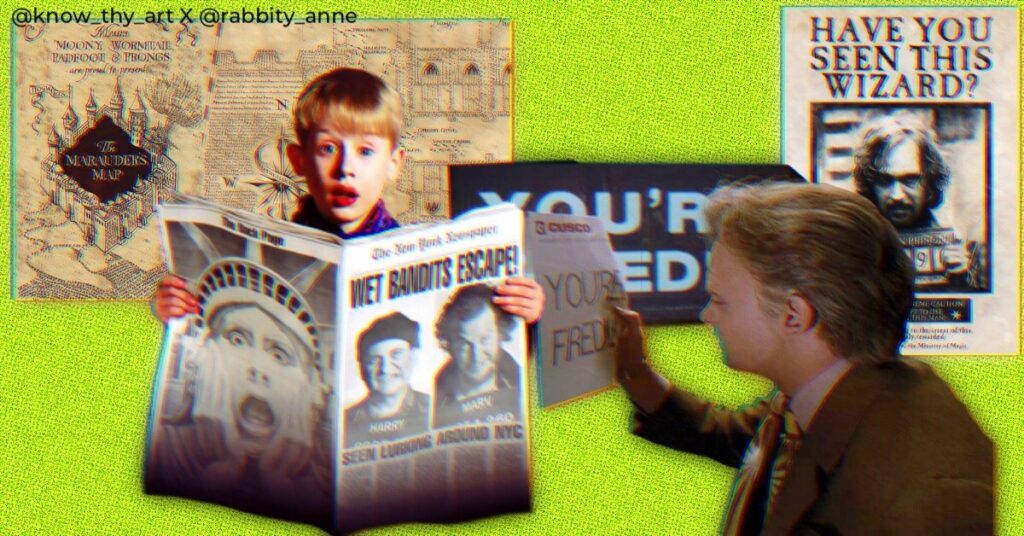
Imagine a scene shot in a World W@r 2 bunker. The shelves and wooden boxes that would store the weapons, the stencil stamps on the wooden boxes that say “ammo” and the maps with little flag pins everywhere would have to be designed and made by a Prop Designer. Books in a library, the newspaper in the actor’s hand, the newsreel on TV, a wanted poster, a letter stamp in a period film, a signboard on a shop and many other little details would need a Prop Designer. There are many iconic graphic design elements in classic films which show the impact of graphic design on movie marketing and memorability.
Colour Schemes and Scene Themes
An experienced Graphic Designer would have surely mastered colour theory and can probably see a colour wheel and pick complementary colours just by closing their eyes for a second to imagine it. This is exactly the experienced advice that the Screenplay and Director of Photography would need. The colour scheme of dark muted colours of a funeral scene needs to be perfect. For this, the Screenplay, Photographers and even Costume Designers would consult a Graphic Artist. They are the experts who know what colours, effects and textures would go best with the vibe of the scene.
Scene Layout and Photography
Movies are ideally a dramatic representation of events within a story. While it is important for the story to be told well, it is also important for the scenes to be visually pleasing. Left and right symmetry in a calm scene, golden ratio proportions for when an actor monologues for dramatic effect and other such storytelling cues are Gestalt’s Design Principles brought to life. Who better than an advisor from the Graphics Department to get these scenes just right?
Art Direction
In a romantic scene with a proposal and lots and lots of flowers. If the story is about a passionate affair, then pastel flowers just won’t do. The decision to choose fiery red flowers with dark leaves to prepare the set will have a better visual impact. The Art Director may delegate the work to a VFX team and make a CGI background. Even if that is the case, Graphic Artists will have an extremely important role in the CGI team. They are involved from the very first sketches and mockups that go on to become a 3-dimensional reality.